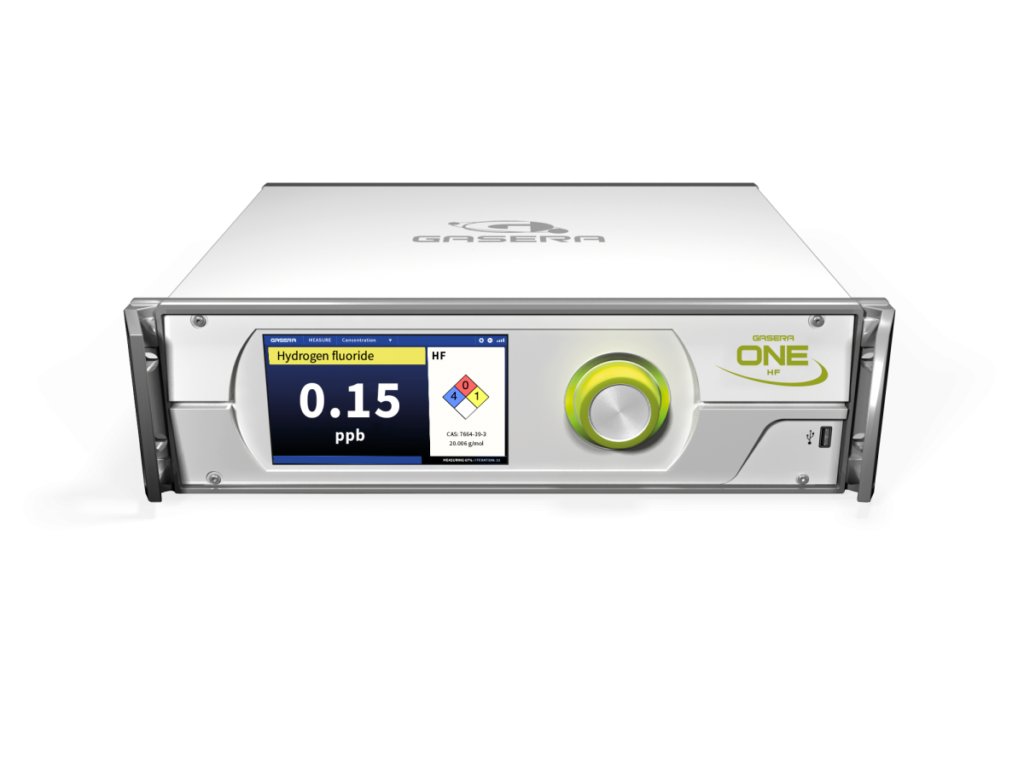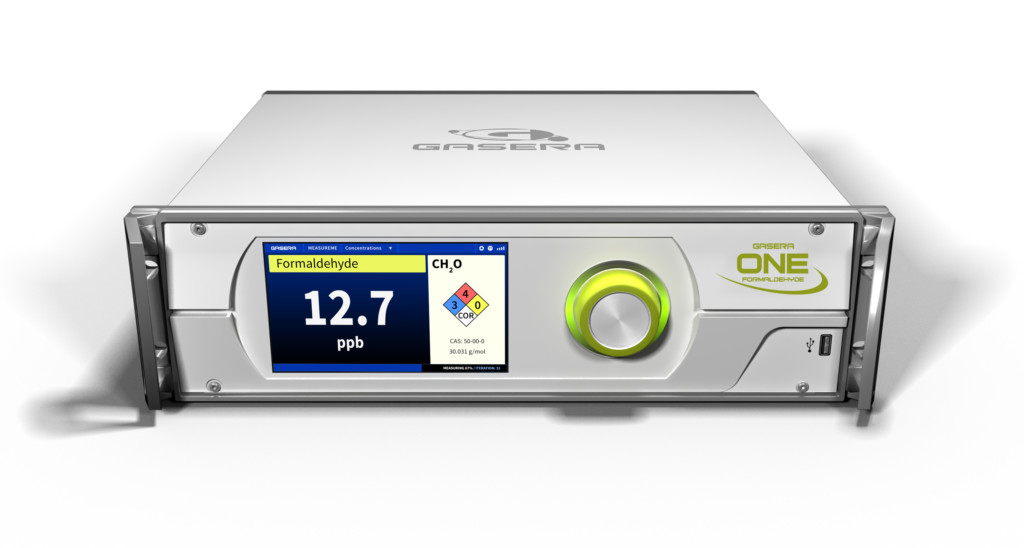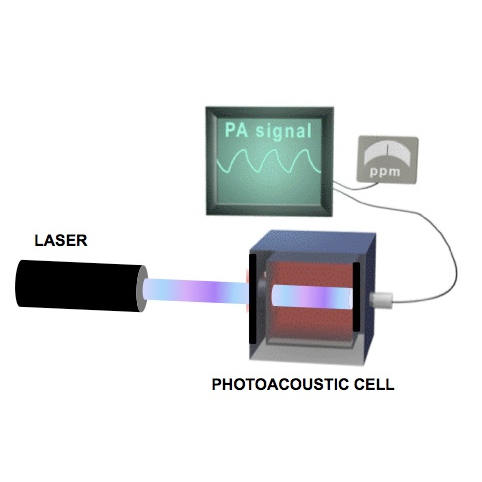
Laser-based sensing techniques are attracting great interest in various fields of applications. Among a multitude of detection schemes, photoacoustic detection offers some unique advantages over other laser-based techniques such as low sample volume, high sensitivity and wide linear dynamic range. Signal is generated purely from absorption, thus being a so called zero-background technique. The performance of a laser photoacoustic spectroscopy system depends on the availability of appropriate laser sources, modulation schemes and the pressure sensor (i.e. microphone).
Gasera’s ultra-sensitive cantilever microphone enables high sensitivity even with low cost telecom diode lasers that operate at the weak overtones of fundamental vibration bands. On the other hand, combination with high power Mid-IR quantum cascade lasers provides detection limits that no other method can achieve.
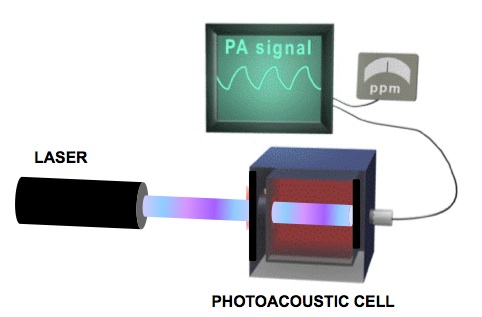
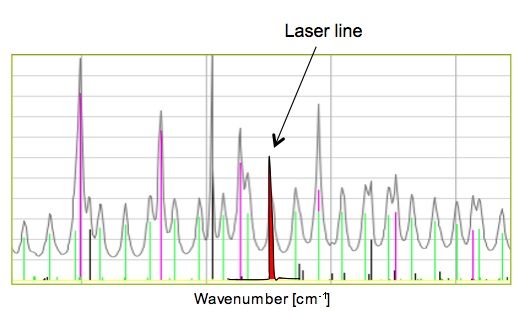
In tunable diode laser photoacoustic spectroscopy the laser wavelength is selected so that only a single absorption line, characteristic to a target molecule, is used. This allows highly selective measurements. The power density of laser light is very high allowing high sensitivity and short response time. With tunable diode lasers a wavelength modulation across the absorption line is performed in order to minimize background signal.
Laser-PAS applications include
- Process control
- Environmental monitoring
- Greenhouse gas flux measurements
- Engine exhaust measurement
- Breath analysis
- Safety and security
- Leakage monitoring
- Air quality monitoring
- Automotive